
German Christmas Traditions: Complete Family Celebration Guide 2026
Holiday Time-Saver: Creating personalized holiday letters inspired by cultural traditions can be overwhelming. Magic Letter Box helps you maintain meaningful holiday traditions without the stress, letting you focus on making memories with your children.
The enchanting world of German Christmas traditions brings together centuries of customs that celebrate family, faith, and festive correspondence. From handwritten letters to the Christkind to daily Advent calendar surprises, German holiday customs emphasize the power of written words to create lasting memories. As families worldwide seek to create meaningful holiday traditions, these time-honored German practices offer inspiration for modern celebrations.
The German Christmas Season Timeline
The German Christmas season follows a carefully orchestrated sequence of celebrations, each marked by special customs and written traditions.
St. Nicholas Day (December 6th)
On the eve of December 6th, German children carefully place their freshly polished boots or shoes by the door, hoping St. Nicholas will fill them with treats. This cherished tradition traces back to the life of Saint Nicholas himself, who served as Bishop of Myra in the 4th century. According to historical accounts documented by the Encyclopedia of Saint Nicholas Day, the custom originated from a legendary act of generosity where Nicholas threw money through a poor family's window, which landed in shoes drying near their fireplace. Saint Nicholas died on December 6, 346 CE, which became his feast day and the origin of this gift-giving tradition. The practice has been observed throughout Christian Europe for over 1,600 years, with the boot and shoe custom being particularly strong in German-speaking regions.
Pro Tip #1: Create a new family tradition by leaving personalized notes from St. Nicholas alongside the treats, encouraging good behavior and expressing appreciation for specific kind acts your child has done. Magic Letter Box can help you create these special notes efficiently.
The Advent Season
Advent marks the four weeks before Christmas, traditionally beginning between November 27 and December 3rd. German families embrace several written traditions during this time:
Advent Calendar
Unlike modern chocolate-filled calendars, traditional German Advent calendars often contained handwritten notes or small letters with daily messages, poems, or activities. Today's families can maintain this tradition by preparing simple notes in advance or using digital tools to create personalized daily messages that keep the magic alive while managing busy schedules.
Advent Wreath (Adventskranz)
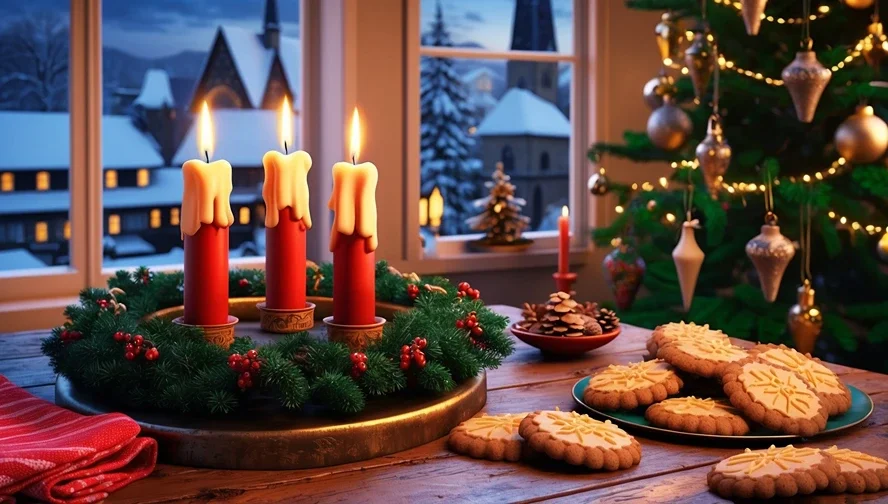
The Advent wreath, first created by German Lutheran pastor Johann Hinrich Wichern in 1839, features four candles lit on consecutive Sundays before Christmas. Many families complement this tradition by reading special messages or letters as they light each candle.
| Traditional German Advent Wreath Components | Significance |
|---|---|
| Four candles (three purple, one pink) | Representing the four Sundays of Advent |
| Fresh evergreen branches | Symbolizing eternal life |
| Red ribbons | Representing joy and celebration |
| Pine cones and ornaments | Adding traditional decorative elements |
Letter Writing to the Christkind
Unlike many other countries that write to Santa Claus, German children traditionally write letters to the Christkind (Christ Child). The Christkind Post Office in Engelskirchen receives over 100,000 letters annually from children around the world, making it one of Germany's most cherished holiday letter-writing traditions.
Pro Tip #2: Help your children write their Christkind letters early in the season, allowing time for reflection on the year's blessings and hopes for the coming year. Consider creating a family tradition of preserving these letters in a special holiday memory book.
Essential German Christmas Traditions for Families
Pro Tip #3: Keep your holiday traditions manageable by using Magic Letter Box to automate personalized holiday messages while you focus on other festive activities like baking and decorating.
Christmas Markets (Weihnachtsmärkte)
The tradition of Christmas markets in Germany dates back to the late Middle Ages. According to the official Nuremberg Christkindlesmarkt history, their market is one of Germany's oldest Christmas fairs, with the pre-Christmas event on Nuremberg's Main Market Square dating back to the mid-16th century. The first written record of the market appears in 1628, though the tradition predates this documentation.
| Traditional Market Features | Modern Family Activities |
|---|---|
| Handwritten wish lists | Digital holiday planning |
| Letter writing stations | Interactive message centers |
| Traditional caroling | Family singing events |
| Craft demonstrations | DIY workshops |
Holiday Baking Traditions
German Christmas baking, or Weihnachtsbäckerei, is a cherished family tradition dating back to the Middle Ages. According to historical records, the tradition began with monks in medieval monasteries who baked special treats to commemorate the birth of Jesus, creating the first recipes for Stollen and Lebkuchen. However, it wasn't until the late 19th century that Christmas baking became common in ordinary households, as ingredients like sugar, vanilla, and spices finally became affordable for everyone. Today, families continue this centuries-old tradition, creating everything from Lebkuchen to Zimtsterne, often using recipes passed down through generations.
Traditional German Christmas Cookies
- Lebkuchen (German gingerbread)
- Zimtsterne (cinnamon stars)
- Vanillekipferl (vanilla crescents)
- Spritzgebäck (butter cookies)
Pro Tip #4: Create a special family baking day and document your recipes and memories in personalized letters to be shared with future generations. Take photos of your baking adventures and write down not just the recipes, but the stories and moments that made each baking session special. These documented memories will become cherished family heirlooms that can be passed down through generations.
The Tradition of Advent Reading
German families traditionally gather each evening during Advent to read holiday stories and share written memories. This custom, known as Adventsvorlesung, helps create a peaceful atmosphere during the busy holiday season.
Modern Advent Reading Schedule
- Sundays: Traditional German Christmas stories
- Mondays: Family memory sharing
- Wednesdays: Holiday poems and songs
- Fridays: Magical winter tales
Creating Your German Christmas Experience
Transforming your home into a German Christmas wonderland involves several key elements that engage all the senses. Here's how to incorporate authentic German traditions while keeping them manageable for modern families.
Traditional Decorations (Weihnachtsschmuck)
| Traditional Element | Modern Adaptation | Family Activity |
|---|---|---|
| Nutcrackers | Personalized display | Create story cards for each figure |
| Pyramid Carousels | LED-lit versions | Daily rotation ceremony |
| Glass Ornaments | Shatterproof alternatives | Family ornament journal |
| Advent Stars | Battery-operated stars | Star-lighting ritual |
Pro Tip #5: Document your family's decoration traditions with personalized letters from your holiday helper. Elf Letter Bot can help create magical notes about each special ornament and decoration.
Music and Carols (Weihnachtslieder)
According to the Vistawide, German Christmas carols are an essential part of the holiday tradition. Many families gather around the piano or simply join in singing traditional songs like "Stille Nacht" (Silent Night) and "O Tannenbaum."
Essential German Christmas Songs
- Stille Nacht (Silent Night)
- O Tannenbaum (O Christmas Tree)
- Ihr Kinderlein Kommet (O Come, Little Children)
- Es ist ein Ros entsprungen (Lo, How a Rose E'er Blooming)
Food and Treats (Weihnachtsessen)
Traditional German Christmas food focuses on shared meals and special treats. The Austrian Tourism Board notes that many of these customs are shared throughout German-speaking regions.
Gift-Giving Customs
German gift-giving traditionally occurs on Christmas Eve (Heiligabend), after the evening church service and dinner. This special time, known as Bescherung, is when families gather around the Christmas tree to exchange presents. While some families may include small notes with their gifts, the focus is primarily on the shared experience of being together and celebrating as a family.
Traditional Gift-Giving Schedule
- December 6: St. Nicholas Day gifts and notes
- Advent: Small daily surprises with messages
- December 24 (afternoon): Main gift exchange
- December 25-26: Extended family celebrations
Modern Adaptations of German Traditions
While preserving the heart of German Christmas customs, many families are finding innovative ways to adapt these traditions for contemporary life.
Digital Advent Calendars and Messages
Making Traditions Manageable: Modern families can maintain the personal touch of German holiday traditions while managing busy schedules by planning ahead. Consider setting aside time on weekends to prepare Advent messages in advance, or involve the whole family in creating a batch of notes that can be used throughout the season. The key is finding a balance between preserving the meaningful aspects of these traditions while adapting them to fit contemporary lifestyles.
| Traditional Element | Modern Adaptation |
|---|---|
| Handwritten daily notes | AI-generated personalized messages |
| Paper advent calendars | Digital calendars with daily activities |
| Evening story reading | Interactive digital storytelling |
| Written carol lyrics | Digital songbooks with recordings |
Virtual Christmas Markets
Many traditional Christmas markets now offer virtual experiences alongside their physical presence. This hybrid approach allows families worldwide to participate in German holiday traditions.
Digital Market Activities
- Virtual market tours
- Online craft workshops
- Digital recipe exchanges
- Live-streamed carol concerts
Modern Letter Writing
The tradition of writing to the Christkind continues to evolve. Today's families can blend traditional handwritten elements with modern technology to create meaningful holiday correspondence.
Modern Letter Writing Ideas
- Create personalized letters using Magic Letter Box
- Design digital scrapbooks of holiday memories
- Record video messages alongside written notes
- Share traditions through family blogs
Social Media Integration
Modern German families often share their traditions through social media, creating digital advent calendars and daily holiday updates. The #germanchristmas hashtag showcases how traditions are being preserved and adapted.
German Christmas Vocabulary
Understanding key German Christmas terms can help families incorporate authentic language into their holiday traditions. Use these words to add cultural richness to your holiday letters and messages.
| German Term | English Translation | Usage in Traditions |
|---|---|---|
| Weihnachten | Christmas | General holiday greetings |
| Christkind | Christ Child | Gift-bringing figure |
| Heiligabend | Christmas Eve | Main celebration |
| Adventskalender | Advent Calendar | Daily December countdown |
| Bescherung | Gift-giving ceremony | Christmas Eve tradition |
Frequently Asked Questions
When do German families typically exchange gifts?
German families traditionally exchange gifts on Christmas Eve (Heiligabend) after attending church services. According to the Fintiba, this evening celebration is often considered the highlight of the Christmas season.
How can I incorporate German traditions if I don't speak German?
Focus on the customs and meanings behind the traditions. Use services like Magic Letter Box to create personalized holiday messages that incorporate simple German phrases while maintaining your family's primary language.
What makes German Christmas markets special?
German Christmas markets are known for their unique atmosphere, combining traditional crafts, food, and community celebration. The UNESCO-recognized markets often feature local specialties and regional traditions.
Summary and Modern Applications
German Christmas traditions offer a rich foundation for creating meaningful family celebrations that combine the best of old and new customs. By incorporating these traditions thoughtfully, modern families can:
- Create lasting memories through personalized holiday correspondence
- Build anticipation with daily Advent activities
- Foster cultural appreciation and understanding
- Develop unique family traditions that blend German customs with personal touches
Key Takeaways for Modern Families
- Start with one or two traditions and gradually add more
- Use technology thoughtfully to enhance rather than replace traditional elements
- Focus on creating meaningful moments rather than perfect execution
- Document your family's journey in creating new holiday traditions
Create Your Own Magic: Magic Letter Box helps you bring the wonder of German Christmas traditions to life with personalized letters for all occasions! From holiday elf and Santa letters to tooth fairy notes, Easter bunny messages, and birthday greetings - we've got you covered. Start with 5 free letters, then enjoy unlimited access for just $15/year with our great templates and easy customization tools. Start creating your magical moments today!
Whether you're looking to connect with your German heritage or simply enrich your family's holiday celebrations, these traditions offer timeless ways to create magic and meaning during the Christmas season.
Create Your Own Magical Elf Letters!
Visit The Magic Letter Box to create personalized, AI-powered elf letters that will make your holiday season even more magical.
Related Articles

Australian Christmas Traditions: A Summer Holiday Guide 2026
Picture a Christmas where santa hats meet swimsuits, and carols echo across sun-drenched beaches. Welcome to Christmas in Australia, where December brings summer sunshine and unique holiday traditions that blend colonial heritage with modern beach culture. As Christmas in Australia - Australian Government explains, these celebrations showcase how holiday magic adapts to different climates and cultures.
Read more →
Autism-Friendly Holiday Elf Guide: Magic for Every Child
The holiday season is a time of wonder and excitement, and for many families, holiday elf traditions add an extra sprinkle of magic. However, for children with Autism Spectrum Disorder (ASD), these beloved traditions may present unique challenges. In this comprehensive guide, we'll explore how to adapt holiday elf traditions to create an inclusive, magical experience for children with autism, ensuring that every child can participate in the joy of the season
Read more →
Elf Arrival Letters: 25+ Ideas + Free Personalized Generator
The first morning your family's holiday elf appears is pure magic. You hear the patter of little feet racing through the house, the gasps of discovery, the excited squeals of "Our elf is back!" or "We have an elf!" This moment—this single December morning—sets the tone for your entire holiday season.
Read more →
Magical Elf Letter Fonts: Enchant Your Holiday Writing
When crafting a letter from your holiday elf, the font you choose can make all the difference. Just like the content, the presentation is crucial in bringing the magic of the holiday season to life. A whimsical, festive font can help create a letter that feels truly special, making the experience more memorable for your child.
Read more →